ween countries is fragile but holding
CONTENT WARNING: This story is deeply complicated. Understanding it requires more than what is provided in any single news article. It also contains information about war and death. Consider reading it with a trusted adult and looking for other credible sources to broaden your understanding of conflicts in the Middle East. It’s common to have an emotional reaction to the news.
⭐️HERE’S WHAT YOU NEED TO KNOW⭐️
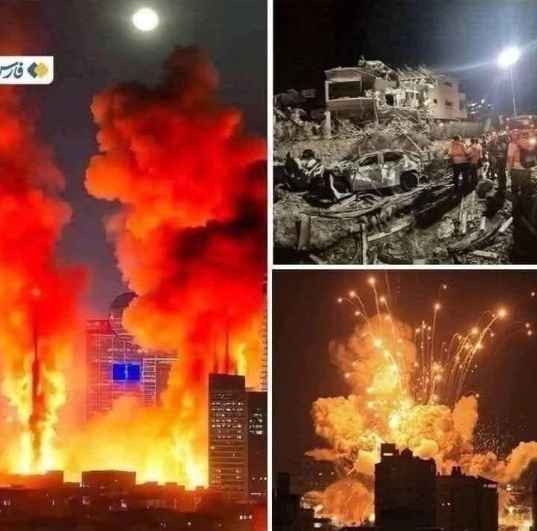
- Israel attacked nuclear facilities in Iran with missiles on June 13.
- Iran has retaliated with its own strikes, and people on both sides have been killed.
- On June 21, the United States joined the fighting and bombed a nuclear facility in Iran.
- Israel and the U.S. said they attacked because Iran is close to building nuclear weapons, which Iran denies.
- A ceasefire deal reached on June 23 is shaky but appears to be holding.
- Read on to find out why experts are concerned. ⬇️⬇️⬇️
For almost two weeks, Israel and Iran — two countries in the Middle East — have been at war.
It started when Israel said it fired missiles into Iran on June 13 to destroy its nuclear facilities.
These are places where a metal called uranium is enriched and turned into a concentrated energy source that could be used to create nuclear weapons, the world’s most powerful bombs.
Israel said it attacked out of fear that Iran would create those weapons.
Iran denies this, saying their nuclear program is for peaceful purposes, like generating power.
On June 21, the U.S. got involved by bombing three nuclear sites in Iran. Iran later fired missiles at a U.S. military base in Qatar.
A few days later the three countries agreed to a ceasefire, which appears to be holding for now.
What’s a nuclear weapon?
You may be wondering— what exactly is a nuclear weapon? Where did they come from, who has them, and why are they such a threat?
Read this explainer on nuclear weapons — it may help you better understand the rest of this article and how we got here.

Why did Israel attack Iran?
Iran’s leadership has long called for the destruction of Israel.
There’s been tension between Iran and Israel for many years, and they’ve exchanged fire as recently as 2024, though that escalation didn’t last long.
But on June 13, it once again came to a head.
Israel claimed that Iran was very close to making nuclear weapons which could be used against Israel.
Israel is widely believed to have its own nuclear weapons, but has denied this.
“In recent months, Iran has taken steps it has never taken before to weaponize this enriched uranium,” said Israeli Prime Minister Benjamin Netanyahu following the initial attack.
Iran fired missiles back at Israel in retaliation.
More than 900 people have been killed and thousands wounded in Iran, according to a Washington-based Iranian human rights group.
At least 28 Israelis have been killed and more than a thousand wounded, according to Israel’s Health Ministry.

But was their attack justified?
Some have criticized Israel for acting without enough proof.
“There was no evidence that Iran was about to attack Israel,” Mira Sucharov, professor of political science at Carleton University in Ottawa, Ontario, told CBC Kids News.
A recent report from the International Atomic Energy Agency — which monitors nuclear programs around the globe — concluded that Iran likely does not currently have nuclear weapons.
But they also concluded Iran is likely hiding parts of its nuclear program from inspectors.
They also said Iran isn’t following all of the rules that many countries around the world have agreed to that prevent the development of more nuclear weapons.

Still, Sucharov said Israel may have broken international laws that require a country to provide clear evidence of a threat before attacking another country.
Others think it was justified regardless.
“Some think Israel’s attack was ethical, that they are protecting themselves and protecting the world from a future Iranian nuclear threat,” said Sucharov.
Why did the U.S. get involved?
Some of Iran’s nuclear facilities were buried deep underground, and Israel didn’t have the weapons to destroy them.
But the U.S. — their close ally — has those weapons. The U.S. has expressed worry about Iran obtaining nuclear weapons for years.
“The U.S. has said for 20 years they could possibly bomb Iran, but no president has ever done so. Here, Trump saw an opportunity,” said Christian Leuprecht, a military expert and professor of political science at Queen’s University in Kingston, Ontario.

Leuprecht said that opportunity presented itself after Israel weakened Iran over the past year through, among other factors, dismantling some of Iran’s key allys.
Trump has been negotiating with Iran this year to sign a deal that would limit Iran’s nuclear programs in exchange for the U.S. lifting sanctions.
Sanctions are penalties that can cost a country lots of money and have weakened Iran’s economy.
But those negotiations haven’t been successful.
Leuprecht said Trump may have bombed Iran’s nuclear facilities to force them back to negotiations, this time with less leverage.
That said, Iran has insisted it will not give up its nuclear program.
Despite U.S. strikes hitting three Iranian nuclear sites, it’s not clear how much their overall nuclear program has been set back.
What’s happening now?
On Monday, Iran launched attacks on U.S. bases in the Middle Eastern countries of Qatar and Iraq.
Early Tuesday morning, Trump announced that the U.S. and Israel had reached a ceasefire deal with Iran.
Later that day however, Israel and Iran accused one another of breaking the ceasefire through missile strikes.
On Wednesday, the ceasefire appeared to be holding and Trump said that U.S. and Iranian officials would reenter talks next week.

Have more questions? Want to tell us how we’re doing? Use the “send us feedback” link below. ⬇️⬇️⬇️