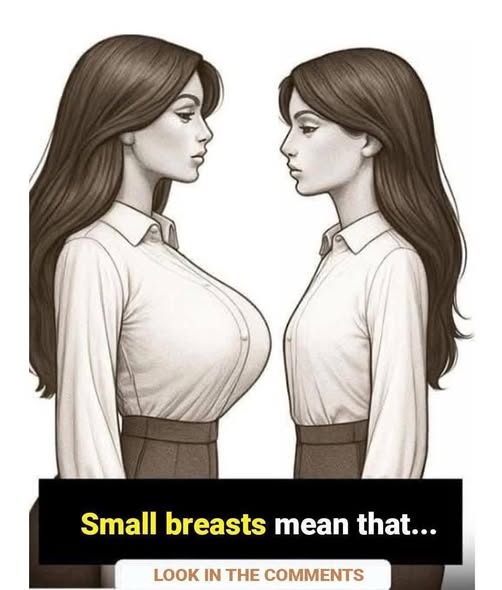
For generations, women have carried the weight of endless myths about their bodies—especially when it comes to breast size. From cultural ideals to whispered judgments, society has often treated breasts as symbols of beauty or fertility, without ever stopping to ask the deeper question: does size truly say anything about a woman’s health?
Behind closed doors, many women quietly wonder: Is my body telling me something? Do smaller breasts mean I’m less feminine? Do larger breasts mean my hormones are “better”? These questions are deeply personal, and for too long, they’ve been clouded by myths rather than science.
The truth is far more powerful—and liberating.
The Biology Beneath the Surface
Breast size begins with genetics, but hormones shape much of their journey. During puberty, estrogen and progesterone guide growth, while age, body composition, lifestyle, and even diet continue to influence size throughout life.
But here’s the key: size is not a health verdict.
Small breasts don’t mean “hormonal imbalance.” Large breasts don’t mean “stronger hormone production.” Breasts are made of fat, connective tissue, and glands—each body simply distributes them differently.
Science reminds us: what matters is balance, not cup size.
Myths That Steal Confidence
For decades, women with smaller busts have been unfairly labeled as “less feminine” or “less fertile.” Science says otherwise—fertility has nothing to do with breast size, but everything to do with the intricate dance of hormones, genetics, and lifestyle.
On the other hand, women with larger busts often hear comments that bigger automatically equals “healthier.” In reality, larger breasts can sometimes bring challenges like back pain or difficulty during cancer screenings. Meanwhile, smaller breasts can bring ease in movement and less physical strain.
Every body type carries strengths. No single shape defines womanhood.
What Really Matters: Hormonal Harmony
Hormones are the body’s silent messengers, regulating mood, sleep, energy, reproduction, and immunity. When they fall out of sync, women feel it—through fatigue, weight shifts, mood swings, or irregular cycles.
The empowering truth? We have the ability to support balance through everyday choices:
 Nourishment: Whole foods, leafy greens, healthy fats, and omega-3s (like salmon or walnuts) nourish hormone regulation.
Movement: Gentle, consistent exercise keeps stress hormones like cortisol in check.
Stress Care: Meditation, journaling, or even mindful breathing restores inner calm.
Rest: Deep, consistent sleep allows the body to heal and reset.
Medical Guidance: Persistent symptoms deserve care and answers from trusted professionals.
Ancient Wisdom, Gentle Remedies
Women across cultures have turned to nature to ease hormonal shifts:
 Sage Tea to soothe menstrual discomfort.
Maca Root to boost energy and reproductive balance.
Evening Primrose Oil to calm PMS symptoms.
Ginger to ease cycles and reduce inflammation.
While these remedies can support wellness, every woman should seek guidance to find what’s safe and effective for her body.
Beyond Size: Embracing the Real Story
The obsession with breast size has often stolen women’s peace, leaving them anxious or comparing themselves to others. But breasts are not a measure of worth—they are simply one part of a much greater story.
What defines a woman’s health is her inner balance, her strength, and her care for herself.
A Final Truth to Carry
Breast size is not a sentence, nor a verdict on femininity or wellness. It’s simply a variation of nature, shaped by genetics and life’s rhythms. True beauty—and true health—comes from balance, resilience, and self-love.
So to every woman reading this:
Cherish your body. Honor your hormones. And remember—your worth will never be measured in inches or letters, but in the love and vitality you carry within.